Introduction
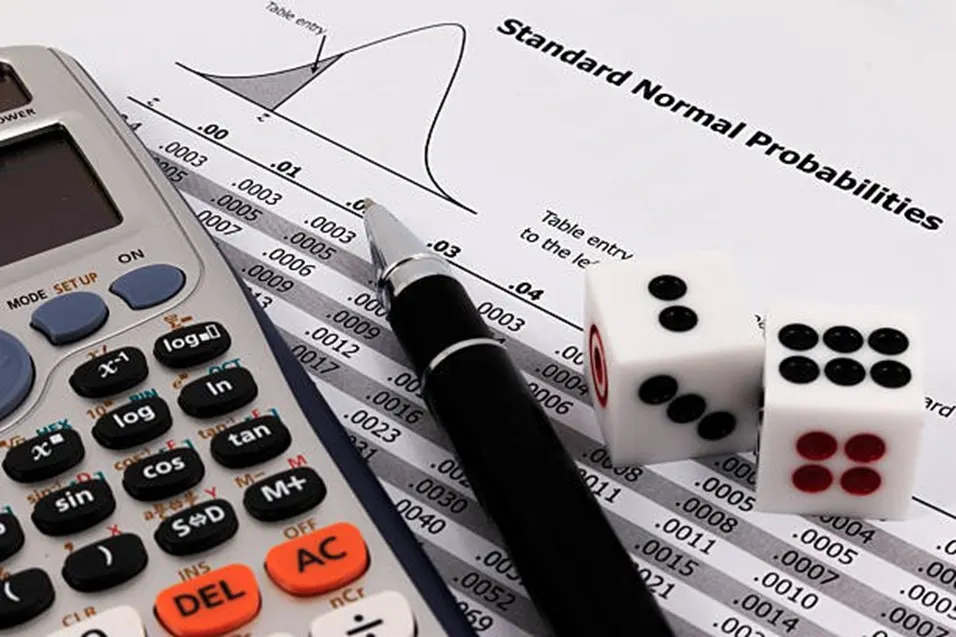
A Standard Deviation Calculator is a helpful statistical tool that can be used to determine the degree of variation or dispersion within a set of numbers from the average value of the numbers. It rapidly analyzes data and demonstrates if the values are compact or dispersed. Every day, students, teachers, researchers, scientists, business analysts, and financial professionals use standard deviation to gain a better understanding of data. The average is not enough when dealing with numbers. Two data sets can have the same mean, but very different distributions.
The standard deviation overcomes this issue by indicating the variation among the data points. These calculations are performed instantaneously by a calculator, which can greatly speed up the statistical analysis and make it more accurate.
Understanding Standard Deviation
Standard deviation is a statistical phenomenon that indicates how far away data points are from the mean value of a data set. The standard deviation is small if the values are clustered around the mean. This implies that the data is uniform. The larger the range over which the values are spread, the greater the standard deviation. This means that there is more variation.
The standard deviation is commonly utilized in mathematics, business, healthcare, education, engineering, finance, and scientific research as it helps to understand the quality and consistency of data.
Understanding how a Standard Deviation Calculator works
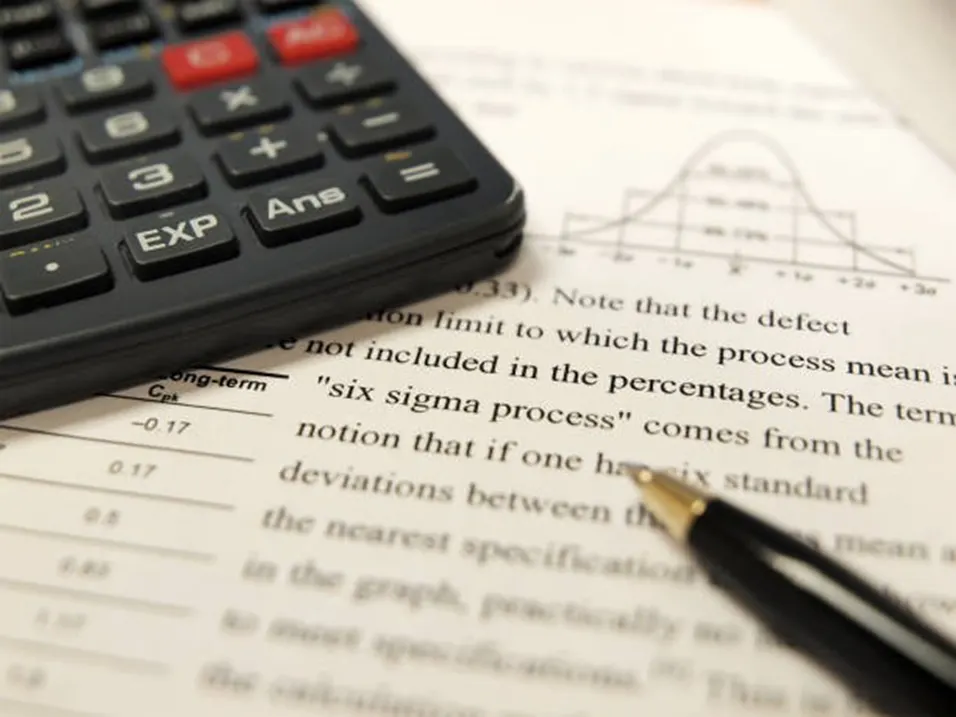
The standard deviation calculator performs a number of mathematical steps automatically. First, it takes the average of all numbers that are typed. It then calculates the distance of each value from the average value. Negative values are eliminated by squaring those differences. The calculator then calculates the mean of those squared values and then finds the square root of the mean. The last value is the standard deviation. This entire process takes just a few seconds, and there is no room for manual calculation error.
Why Standard Deviation is Important
Standard deviation is used to gauge how consistent or inconsistent data is. For instance, a teacher could compare grades on exams between two classes. The average score for both classes may be the same, but the spread of marks in one class may be very small, with students getting very similar marks, while in the other class the spread of marks may be very large. The standard deviation will immediately show which class is more consistent. It is utilized in business to track the quality of goods.
It is used by investors to calculate financial risks. It is used by researchers for analyzing experimental results.
Formula
For a population, the standard deviation is calculated using:
σ = √[Σ(x − μ)² / N]
Where:
● σ = Population standard deviation
● x = Each value in the data set
● μ = Mean (average)
● N = Total number of values
Who uses a Standard Deviation Calculator?
Standard deviation is used by many professionals to analyze numerical information. Common users include:
● Students studying statistics.
● Mathematics teachers.
● Scientific researchers.
● Data analysts.
● Financial analysts.
● Business managers.
● Healthcare researchers.
● Quality control engineers.
Every one of these users relies on the proper statistical analysis to make decisions.
When calculating standard deviation, common mistakes are made.
An error is often to input incomplete or wrong data. A single wrong number can make a huge difference to the outcome. The other error is in the formula. The calculations for population standard deviation and sample standard deviation are slightly different. Choosing a proper option is crucial to getting correct results. Some users also believe that the bigger the standard deviation, the worse the problem is. In practice, more variability is likely to occur in many cases. The meaning varies with the data being interpreted.
A good calculator minimises calculation errors and gives confidence to the user to compare data sets. In real life, what can we use standard deviation for? What are some real-world uses of standard deviation?
Use of this Calculator
In education, schools assess examination performance and compare student results. Product consistency is the term used to track the quality of manufacturing in businesses. Medicines and people's health are studied by healthcare workers. Experiments are conducted in the laboratory to see if repeated measurements are reliable, thereby studying them.
Frequently Asked Questions
What is the unit of measure of the standard deviation?
It indicates the dispersion from the average value of the items of a data set.
What is the standard deviation that is considered to be low?
Low standard deviation: the data is more consistent, most values are near the mean.
What is the difference between variance and standard deviation?
Variance is a measure of the average squared deviations from the mean. Standard deviation is the square root of the variance, making it easier to interpret.
When is it appropriate to use sample standard deviation?
When you have data that is a sample from a larger population, use the sample standard deviation.
What could be the value of standard deviation if it were zero?
Yes. If all values in the data set are the same, they have no variation, so the standard deviation is zero.
Conclusion
A Standard Deviation Calculator is a crucial statistical tool that calculates the deviation of data from an average. It automates complex math computations and provides insights into consistency, variation, and data quality. From analyzing financial data and forecasting market trends to interpreting scientific findings and improving business performance, knowing the concept of standard deviation empowers you to make informed decisions with trustworthy information. Incorporating speed, precision, and user-friendliness, a standard deviation calculator is a valuable instrument for students, professionals, and researchers alike.