Introduction
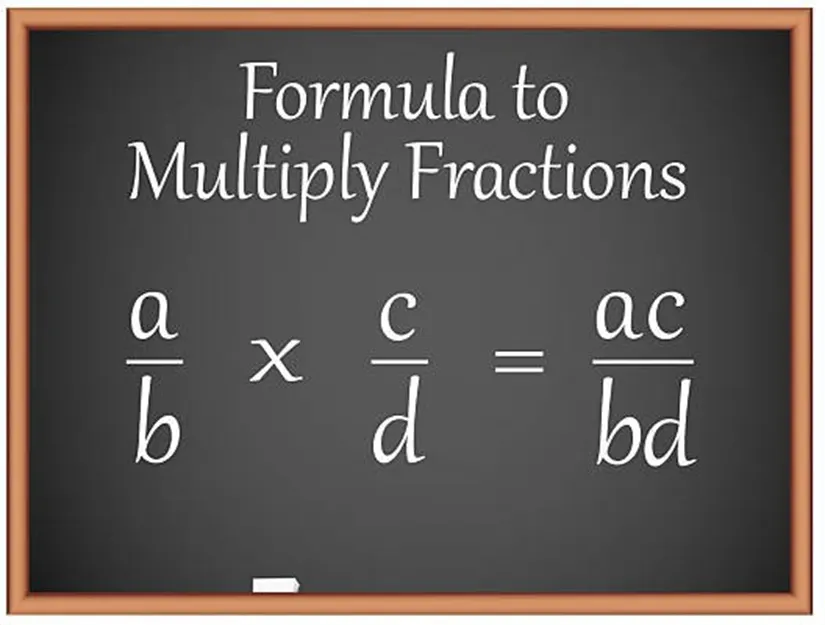
Useful Fraction Calculator online for Quick and accurate addition, subtraction, multiplication, and division of fractions. It will also automatically simplify the results, which will make them more easily understood and able to be used in the final answer. Fractions are a significant part of mathematics and can be applied in various real-life scenarios, including cooking, construction, budgeting, and measurement.
Manual fraction calculations can sometimes be confusing, particularly when dealing with unlike denominators or mixed numbers; a fraction calculator gives a dependable method of finding exact results within a blink of an eye.
What Is a Fraction?
A fraction is a portion of a whole. It is expressed as a fraction with a numerator on top and a
denominator on the bottom, and connected by a horizontal line.
Fraction = Numerator / Denominator
The top number, indicating the number of parts being considered. Denominator: the bottom
number that indicates the number of equal parts.
Types of Fractions
There are different types of fractions based on their numerator and denominator.
Proper fractions
A fraction with the numerator smaller than the denominator is called a proper fraction. It is a
number smaller than 1 whole.
Examples: 3/4, 5/8, 2/7.
Improper fractions
A fraction in which the numerator is greater than or equal to the denominator is called an improper
fraction. It is worth more than or equal to 1 whole.
Examples: 7/4, 9/9, 11/5.
Mixed numbers
A mixed number is a number that is made up of a whole number and a proper fraction.
Examples: 2 1/3, 4 3/5.
When you use mixed numbers to do calculations, you can change them to improper fractions.
How to find the sum of two fractions.How to add fractions.
Fractions are added together to form a sum. To add fractions with the same denominator: add
the numerators and write the sum over the same denominator.
a/b + c/b = (a + c)/b
An example that has the same denominator.
1/4 + 2/4 = 3/4
Examples with different denominators
Add with different denominators; first convert to a common denominator.
1/2 + 1/3 = 3/6 + 2/6 = 5/6
The result is 5/6.
How to Subtract Fractions
With fractions, it is the same as adding fractions. When denominators are the same, subtract the
numerators, but do not change the denominator.
a/b − c/b = (a − c)/b
Examples with denominators that are the same
3/4 − 1/4 = 2/4 = 1/2
Demonstration using fractions with different denominators
3/4 − 1/2 = 3/4 − 2/4 = 1/4
The result is 1/4.
How to multiply fractions
Multiplication of fractions is often the easiest of the fraction operations since a common
denominator isn't required. Multiply the numbers in the nom. and the numbers in the
den. Multiply the numbers on the top and the numbers on the bottom.
a/b × c/d = (a × c)/(b × d)
Example
2/3 × 3/4 = 6/12 = 1/2
On simplifying, the result is 1/2.
Dividing Fractions
To divide fractions, multiply the first fraction by the reciprocal of the second fraction. Reciprocal:
This is the result of interchanging the numerator and denominator.
a/b ÷ c/d = a/b × d/c
Example
2/3 ÷ 3/4 = 2/3 × 4/3 = 8/9
The result is 8/9.
Simplifying Fractions
The numerator and denominator of a fraction must not have any common factor other than 1 to
be simplified. Fractions are easier to read, compare, and use in further calculations if they are
simplified.
Example
6/8 = 3/4
6 and 8 are divisible by 2, and simplify to 3/4.
Understanding how a Fraction Calculator works
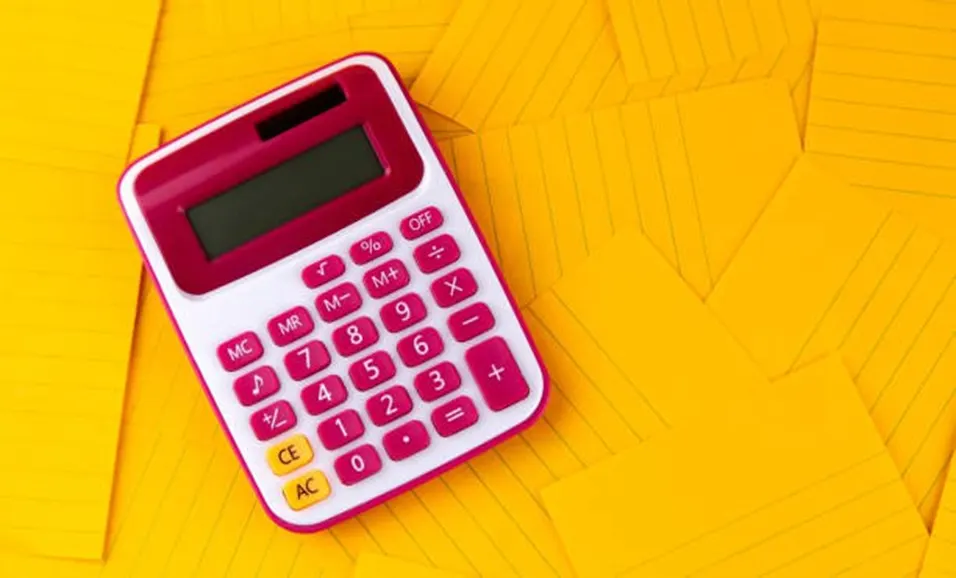
A fraction calculator is a tool that helps you to calculate any fraction arithmetic. The calculator
automatically calculates common denominators and simplifies the results instead of having to
determine them or simplify them by hand. The user inputs the fractions and chooses the
operation. Input: The user types in the
Fractions and chooses the Operation.
Processing: Correctly uses mathematical rules for adding, subtracting, multiplying, or dividing.
Simplification: The value of the fraction is simplified.
Output: The results of this simple expression are shown to the user.
Benefits of using a fraction calculator
● Accuracy: Minimises the risk of hand calculation errors.
● Practicality: Works right away.
● Convenience: Deals with fractions that are greater than 1 and mixed numbers.
● Simplification: Simplifies the results automatically.
Practical Applications of Fractions
A fraction calculator can be helpful not just in the classroom, but in many other real-life
situations involving fractions.
Cooking and baking
Many recipes call for 1/2 cup, 1/5 cup, 3/4 teaspoon, etc. Many times recipes call for fractional
measurements such as 1/2 cup or 3/4 teaspoon. A fraction calculator is a tool that can be used
to fine-tune amounts in recipes.
Construction and measurement
Fractional measurements are commonly used in construction, like 3/8 inch or 5/16 foot. To
obtain accurate measurements, it is important to use fraction calculations accurately.
Budgeting and finance
Fractions may be found in finances, discounts, and splitting up costs between before
people.
Education
Students apply fractions in arithmetic, algebra, geometry, and other places in math. For verifying
answers to homework and to enhance understanding, a fraction calculator will be useful.
Common mistakes
Denominators can be added and subtracted straight away: Denominators can only be added
and subtracted straight away after they are common. Do not forget to simplify the results: When
possible, the results should be simplified. Mixed number incorrectly converted: Make sure that
the whole number is multiplied by the denominator before adding the numerator. Not taking the
reciprocal when dividing: When the second fraction is being divided by, multiply by the reciprocal
of the second fraction.
A denominator must not be zero.
For accurate fraction calculations, have the student use the following tips: When calculating,
make sure to check the numerator and denominator first. Add and subtract using a common
denominator. Write fractions in their lowest terms. Convert mixed numbers to improper fractions
before working with them. Check the final answer to make sure it is reasonable given the
problem.
Frequently Asked Questions
Does the fraction calculator work with mixed numbers?
Yes, a fraction calculator will work with mixed numbers because they can be converted to
improper fractions for calculations.
Does the calculator automatically simplify answers?
Yes, most fraction calculators will simplify a fraction to its lowest terms.
What's the difference between a proper fraction and an improper fraction?
A fraction that has a smaller number (the numerator) than the bottom number (the denominator)
is called a proper fraction. A fraction whose numerator is less than or equal to its denominator is an improper fraction.
Why is it important to simplify?
Simplifying a fraction is doing this to make it easier to read, compare, and use in further
calculations by writing them in their simplest equivalent form.
Is it suitable to use a fraction calculator for day-to-day measurements?
Yes, fractional calculators are helpful for cooking, construction, budgeting, and fractional
measurements.
Conclusion
A Fraction Calculator can be used to add, subtract, multiply, and divide fractions, and is both useful and practical. It also auto-simplifies the results, making these simpler to get and understand. This knowledge of fraction concepts, mixed numbers, and simplification will enable the users to appreciate the workings of the calculator and to use the fractions in calculations with confidence in mathematics and in daily life.
A fraction calculator is a quick, accurate, and easy-to-use tool for fraction-related problems, from students to teachers, from a cook to a builder or anyone dealing with measurements.